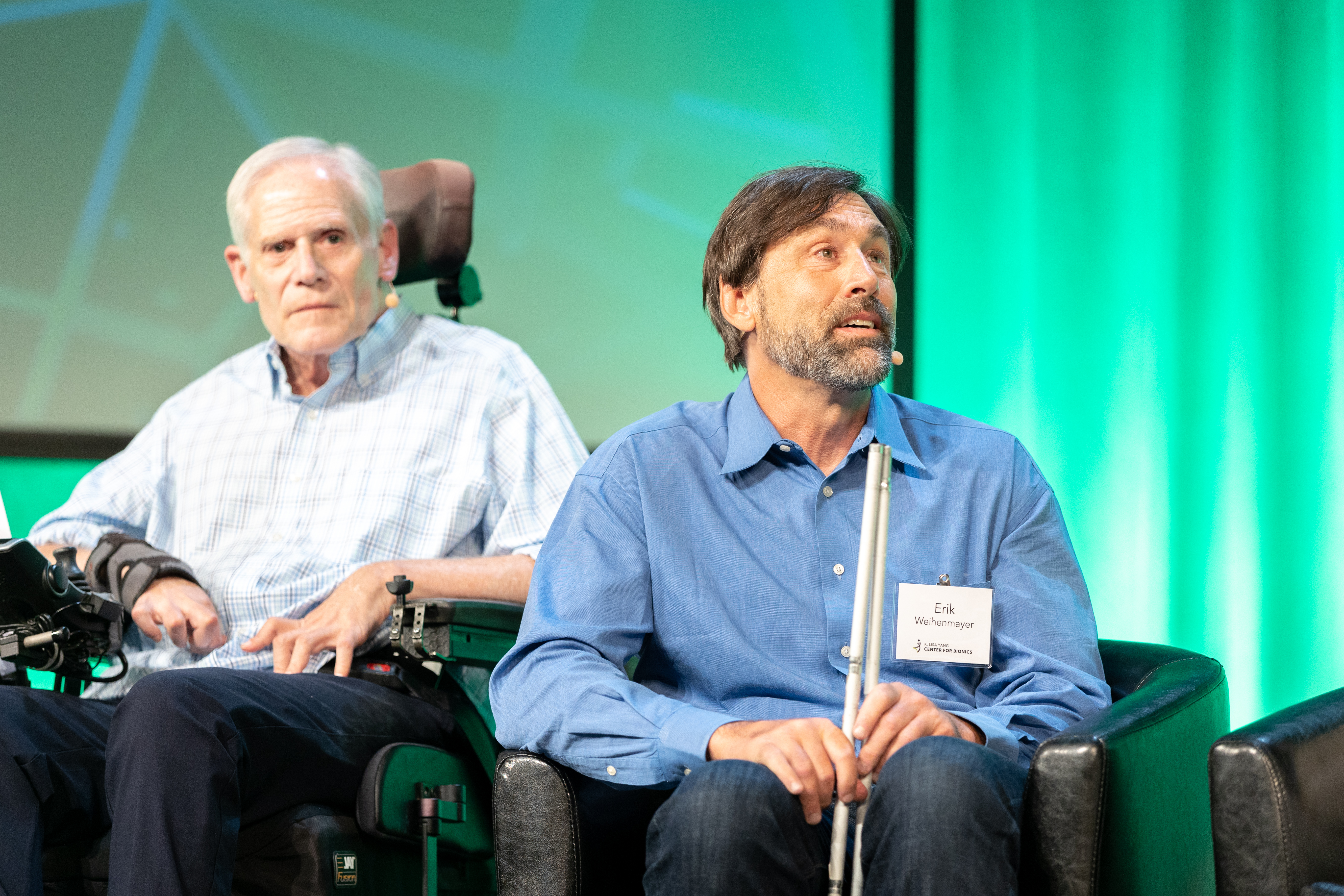
At the end of July, I attended the launch event for the K. Lisa Yang Center for Bionics at MIT in Boston, MA and it was an outstanding celebration. The center focuses on creating advanced technologies that restore the function of bodies and minds affected by injury, aging, and disease.
My friend Hugh Herr is a co-leader for the center (as well as No Barriers Ambassador and Virtual Learning Instructor) and he invited me to be part of a panel. Hugh is a double leg amputee (the result of a tragic climbing accident in 1982) and pioneer in the development of bionic limbs to improve mobility for those with physical disabilities. He invents some of the most sophisticated prosthetics in the world, and now works alongside Professor of Neurotechnology Ed Boyden to merge bionics technologies with the nervous system. Their goal is to create viable, affordable, and accessible bionic technology to improve the lives of individuals impacted by physical and invisible disabilities, especially to those in developing countries.
The panel included me, Hugh, paralympian record-breaker, actress, and speaker Amiee Mullens, and Claude Gerstle, an MIT alum and retired ophthalmologist involved in stem cell research and science-based climate and energy solutions. The discussion was moderated by Patrick Kane, who lost his right leg below the knee and multiple fingers on both hands when he contracted a dangerous blood infection as a baby. Together, we talked about our own experiences and perspectives, the cultural aspects of disability and how it is changing, and how the center will continue to create smarter solutions that smash stigmas and advance lives.
As Patrick once wrote in an article for Guardian:
“For most of history, prosthetics have been designed to make life more comfortable for adults, to afford the wearer some limited movement, and to avoid drawing attention to their disability. It is only recently, as advances in robotics and computing power have been incorporated into artificial limbs, that function has become paramount, and the needs of active disabled people, especially children, have begun to influence design.”
The research and prosthetics being produced by Hugh and his teams at MIT will break barriers across the board and I’m excited I got to be a small part of this incredible, ever-evolving story.
Afterward (not pictured) I even got to visit SHARA Vineyards, Hugh’s commercial winery in Concord, NH – offering tours, tasting, live music and more. It was an excellent end to an excellent time with an old friend.
More Photos from the Event
Photos courtesy of Steph Stevens. Thank you.